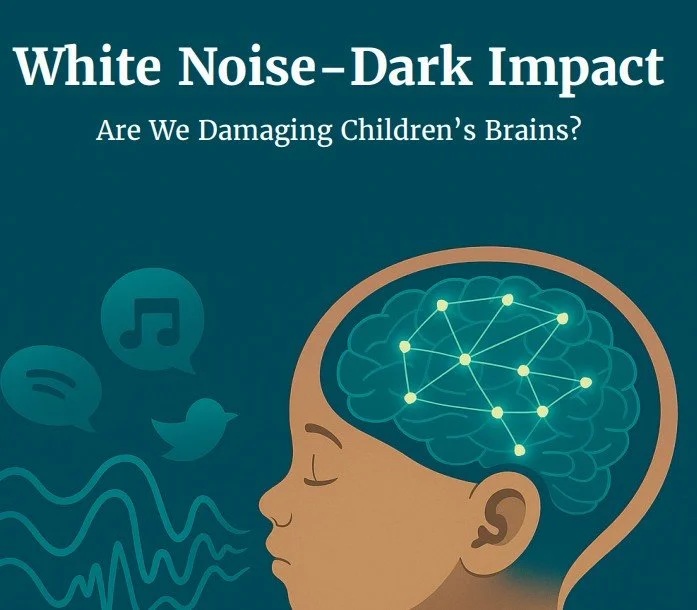
You Asked for More Science-Here it is:
Releasing Nov 22, 2026
Covering the Story Behind the Book and the Science Every Parent Needs to Know!
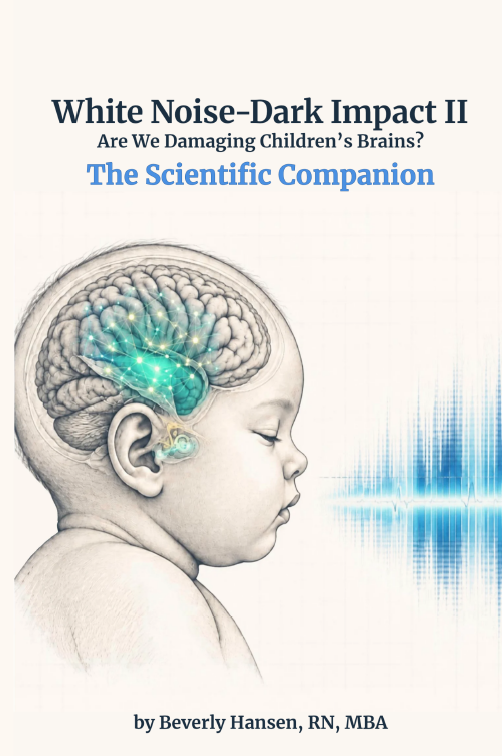
White Noise–Dark Impact II: The Scientific Companion
The hard science on how noise shapes young brains.
After 4 decades as a Registered Nurse and Master Neuroplastician, I had to ask: what does constant engineered sound do to a developing brain for 8–12 hours a night?
The answer shocked me. No published study shows that continuous white noise is safe or effective for an infant’s brain. Foundational neuroscience warns that structureless background noise can disrupt and delay auditory and language development.
Inside, you’ll discover:
The Auditory Architecture: how a baby’s brain maps sound and language during its most critical window, and how constant static interferes with it
The Missing Safety Standards: how these devices reached millions of nurseries without pediatric testing
The Peer-Reviewed Evidence: landmark and recent university research, with clinical key notes for each chapter and direct links to every study
We shouldn’t have to wait decades to ask, “How did we not know?”
Protect the developing brain with evidence, not trends.
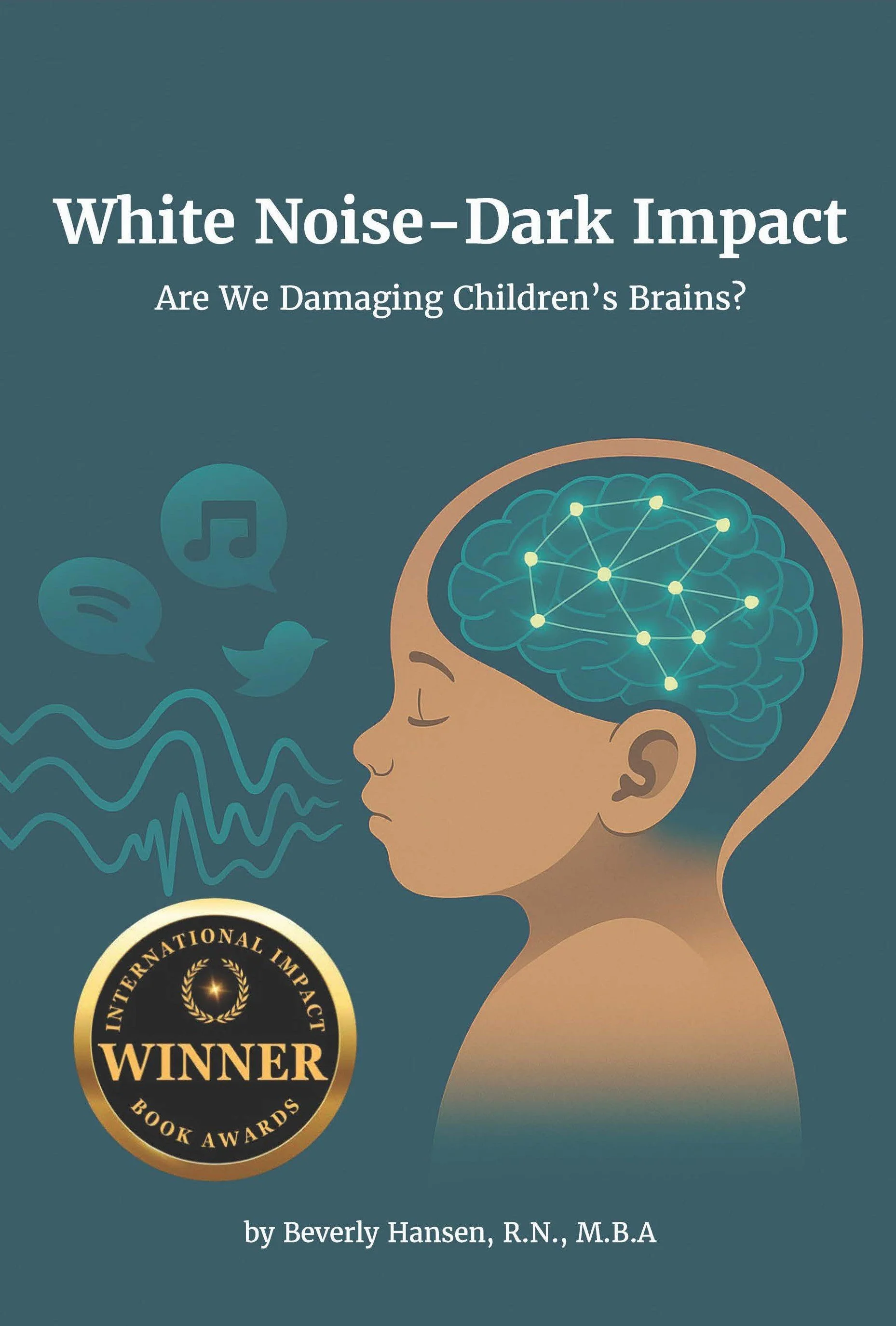
White Noise-Dark Impact: Are We Damaging Children’s Brains?
The book that started a movement
💡Beverly's work in this space started small — noticing the hum of a sound machine in a nursery — and grew into a question most parents, providers, and researchers had never thought to ask.
That question became White Noise–Dark Impact: Are We Damaging Children's Brains?, written by Beverly Ann Hansen, RN, M.NPN — winner of an International Impact Book Award in Health and a current Author of the Year nominee. It sparked a wider movement of parents, researchers and clinicians rethinking the "normal" background noise they'd stopped questioning.
That movement is now Clinical Brainiacs, the 501(c)(3) nonprofit Beverly founded to carry the work forward — funding research, producing evidence-based resources, and advocating for healthier sound environments for children.
Both are part of the same larger mission behind this show: our brains are never fixed, and it's never too early — or too late — to build a better one.
📖 Read the book: a.co/d/0fBv8RJl
🧠 Support the movement: clinicalbrainiacs.org
“Emerging neuroscience reveals that the sounds surrounding infants, voices, music, environmental nuance are not just background. They are the architecture of future cognition, language acquisition, emotional regulation processing. When a child’s first soundtrack is engineered monotony, we must ask: Are we tuning out the world at the very moment they should be tuning in?”